
How Parenting a Child with Complex Needs Is Changing Me
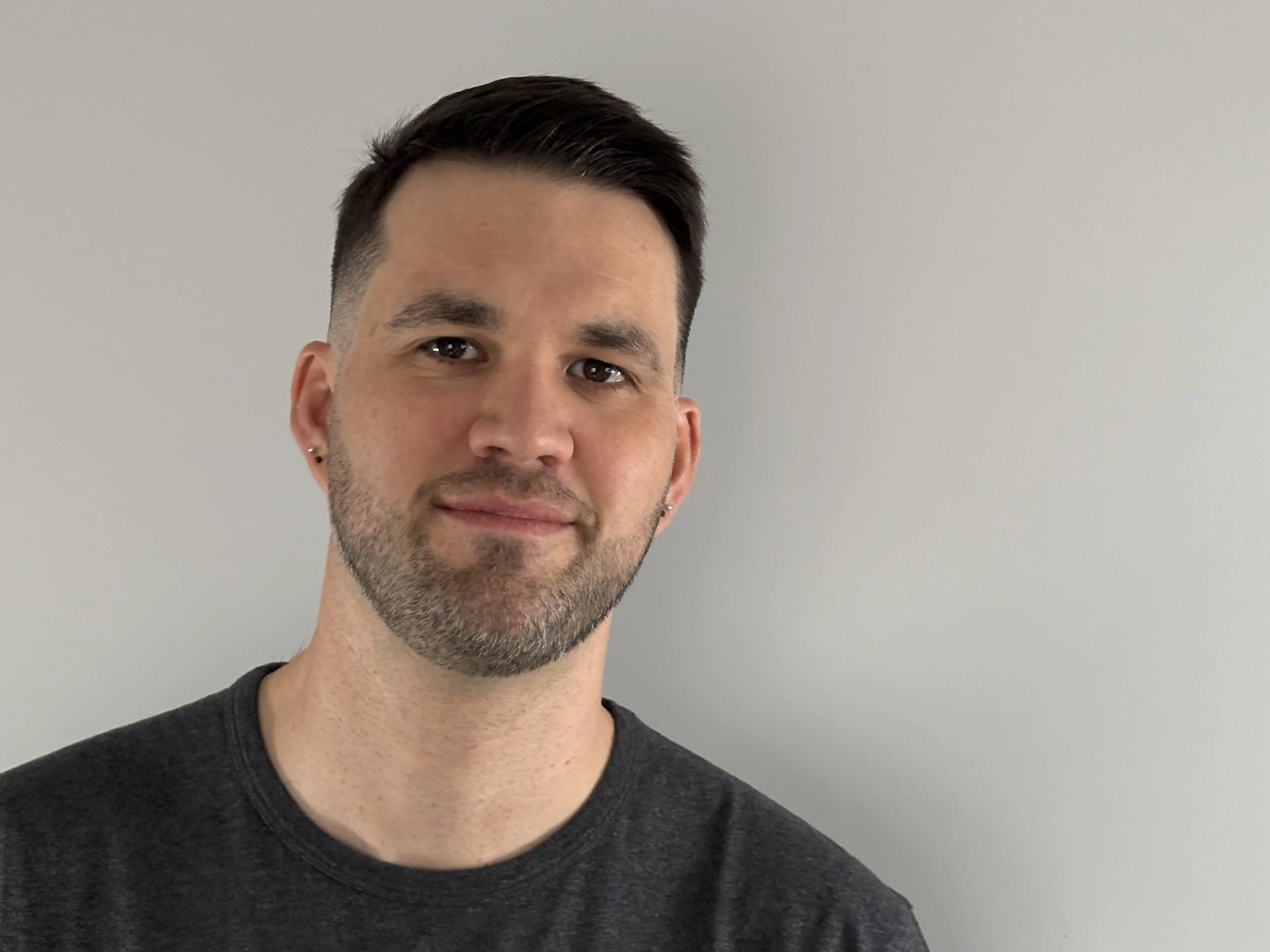
In this guest blog, Joe Ogborn, certified parent coach and co-founder of Strain Relief for Parents talks about his experiences parenting a child with additional needs.
This is why you should carry on reading:
“If you're parenting a child with additional needs, I hope you feel seen.
If you're not, I hope it offers a window into what some of your friends, brothers, neighbours, or colleagues may be carrying in silence.
And if you're a dad, full stop, I think you'll find something here.
Because, protecting your capacity, focusing on what you can control, investing in your closest relationships, and making room for both grief and hope aren't just lessons for families like mine. They're principles that help all of us become the dads our children need us to be.”
———-
Summer usually means holiday clubs for kids — football, gymnastics, forest school, outdoor pursuits. For most families that's a straightforward win: a week of childcare, a few new skills, a tired-but-happy kid at pick-up.
For some of us, it's a little more complex.
My daughter has additional needs, PDA and significant speech delay. She regularly needs 1:1 support, but I often can't remain on site because of safeguarding policies. I understand why those policies exist. At the same time, they can leave families like ours in an impossible position. At one summer camp, her 1:1 support – the only female member of staff and the only one who could speak Makaton – wasn't there on the last day. So when my then 7-year-old daughter had a toileting accident, it was heartbreaking for us to hear it was her younger sibling who was left to help her.
Stories like that don't make the news. They just quietly happen, over and over, to families like ours.
If any of that sounds familiar, this one’s for you. It’s a little snapshot of some of the things I’m learning along the way. And if you're reading this while running on fumes, I would hate for any of this to feel like a to-do list. Take what lands and discard the rest. Every family situation is unique.
I'm also aware that many of the parents whose voices most need to be heard will never have the time or capacity to write them down. This is just one dad's experience.
I protect capacity like treasure
One of my favourite thinkers, Derek Sivers, wrote a short article called No “yes.” Either “HELL YEAH!” or “no.” The idea is simple: say no to almost everything unless it genuinely energises you.
I'd go further for dads of kids with complex needs. My capacity isn't just a nice-to-have — it's a prized possession, and I need to protect it like one.
If volunteering for the PTA or helping at a food bank fills your tank, brilliant, do it. For me, I got a lot more ruthless about where my time went. I safeguarded the relationships that actually filled my cup, and I reluctantly let go of the ones that drained me or in which I was doing most of the lifting. That sounds harsh written down. It didn't feel harsh at the time - it felt like survival.
I don't have unlimited capacity, so I try not to spend it like I do. The capacity I have is reserved for being the Dad my daughters need me to be.
I got stoical
Not stoical in how it’s sometimes perceived – an adjective that means unfeeling or emotionless – but rather the actual Ancient Greek and Roman kind. The philosopher Epictetus said that peace begins by learning to distinguish between what is within our control and what isn't. Redefining success started here.
This philosophy has helped me immensely when it comes to parenting. Four years ago, at an adoptive dads' retreat, the speaker said a line that has stuck with me ever since: "You cannot control your kids' behaviour, only your response."
It’s simple. And it's far more complex to actually live than it is to write down.
I still can't control the explosive meltdown and volatility, the call from the headmaster, the disapproving stare in the supermarket. What I can control is the gap between what happens and how I respond to it. And it's the one thing that is mine to own. It’s often the only lever I’ve got.
I had to invest wisely in relationships
I paid attention to the relationships that surrounded me. For my wife and I, it is easy to let things run on autopilot when our capacity is depleted and the demands of parenting stack up. Like my capacity, this is something I guard fiercely.
We got on the same page - deliberately, not by accident. What are you carrying? Where do we disagree on approach? Small, unglamorous things mattered here: checking in with each other at the end of a hard day, agreeing who's taking the next meeting, not letting resentment build up in the gaps because neither of us said what we needed.
We were, and still are, fortunate enough to still have time for irregular date nights – a luxury not afforded to every parent. And we tried hard not to let them turn into discussions about EHCPs, paperwork and appointments. Parenting a child with complex needs is demanding enough. Relationships require capacity, so I protect those that steady me and invest less in those that feel like another thing I have to survive or another battle to fight.
We got support early
We were fortunate enough to get support in place before we were on our knees asking for it. And for those dads already on their knees, it’s never too late to ask for help.
A word of caution on parenting Facebook groups: they can be a genuine source of solidarity, but they often carry unwritten rules about what you're allowed to complain about, and on a hard day, wading through posts of suffering on top of my own can tip me over rather than hold me up. Likewise, Instagram reels can be a great source of ideas and help – but also add to the unspoken burden of ‘what I should be doing’.
For us, what actually helped was partnering with a parent coach who specialised in adoptive families. It was gold. Somewhere to pour out our thoughts, our fears, our grief, our anger, our confusion, to someone who could hold that space without judgement, with real experience, and a dependable hour every week just to be with us. It felt like a lifeline — particularly because friends and family don't always get it.
I got used to being misunderstood
Nobody else in my child's life sees what I see and what I carry. Well-intentioned comments like: "Your brother was quite strong-willed too" don't land the way people mean them to. What they are unintentionally communicating is: This doesn't sound that different to normal. And here's the thing that stings — they might genuinely believe that, because they've never seen my child’s behaviour when she is struggling the most. I have. I see it every single day, often in the privacy of my own home, because my child holds it together — masks — nearly everywhere else. Teachers get the calm version. Grandparents get the compliant version. I get the full, naked volatility, once the front door shuts. I carry that.
That's exhausting in a way that's genuinely hard to explain to someone who hasn't lived it. I hope every parent can find the person, professional or otherwise, who just gets it.
I voiced the grief
It's okay to love my child fiercely and grieve, at the same time, the impact her complex needs have on her life — and on mine.
Some of that grief is about the big things. Some of it shows up in much smaller moments than you'd expect — the kind that catches you off guard because nobody warns you they'll hurt this much.
It's watching my kid get left behind because the other children scoot off ahead and she's slower. It's watching my kid be overruled in play because she's nonverbal and can't get her needs heard over everyone else's. It's knowing my kid can't join in with football because turn-taking and lack of impulse control mean her outbursts are too big for the game to hold. It's listening to the glowing success of your friends’ children, while knowing that your child writing her name still feels far off.
I watch all of that happen, over and over, and I grieve it — for her, and for the version of childhood she doesn't get to have without a fight.
I didn’t ignore that grief. I felt it. I said it out loud to someone who could hold it. And I refused to feel guilty about it. Grief and love aren't opposites here. They live in the same room.
I ringfence time and energy for advocacy
There's also a sad reality to navigating systems built for other people's children: the squeaky wheel gets the grease.
It helps to know that going in. The world isn't set up for my kid, and you will find yourself fighting — for the right support at school, the right diagnosis, the right understanding from people who mean well but don't see what you see. And that's the thing nobody quite prepares you for: you will see things about your child, and about the systems around them, that literally nobody else sees. That's not a burden you asked for, but it does mean you're often the only person who sees the whole picture.
Go back to the capacity point, because this is where it bites hardest. Fighting for your kid's needs is taxing. It's tiring in a way that quietly outpaces whatever margin you thought you'd budgeted for. Every meeting, every appeal, every phone call chasing a diagnosis takes something out of the same tank you need for everything else — your relationship, your other kids, yourself. It's worth budgeting for that, as it tends to cost more than you'd expect. And sometimes the bravest advocacy is me choosing to go to bed early.
I measure hope differently
Hope has changed shape over the years. It isn't the hope that everything will become easy. It hasn't. It's the quieter hope that comes from noticing what has changed for my daughter.
Sounds became words, which became halting phrases. She has learned to breathe through her meltdowns. Friendships have formed with children who see my daughter for who she is rather than how she differs. The easier days now outnumber the harder ones. My wife and I found people we trust enough to leave the girls with for an evening or day, something that once felt almost unimaginable.
We've also built a steadier home by embracing a slower, less strained rhythm with plenty of margin. Not because life became less demanding, but because we stopped trying to cram a complex life into a schedule designed for a simpler one.
And for some families, hope looks different. Progress comes much more slowly than they imagined, and sometimes not at all. There are parents carrying grief that doesn't resolve neatly with time because the circumstances themselves haven't changed.
More than anything, I hope they have people who can sit alongside that grief. People who don't reach for easy answers or tidy aphorisms. People who don't feel the need to fix it, explain it away, or remind them that "everything happens for a reason". Just people who can quietly stay.
Where this leaves me
Parenting a child with complex needs is demanding in ways that never fully let up. It's also been joyful, funny, and genuinely rich in ways I wouldn't have predicted before I lived it. My experience is my own — for some families, it's much harder than mine has been, and I want to say that plainly rather than pretend one dad's story speaks for all of them.
What I will say is this: it's asked more of me than I knew I had. More intentionality than I might have needed with different children. More headspace than I ever budgeted for — headspace, which is so often the last thing any parent prioritises, and the first thing this kind of parenting demands.
But here's what nobody tells you at the start, on the mornings when you're already in tears by 9 am. This kind of parenting will ask you, again and again, what sort of dad you want to be. I couldn't choose my daughter's needs. I could choose, imperfectly and repeatedly, how I wanted to meet them. That choice has shaped the kind of dad I've become: more compassionate, more gracious, more playful and more curious. I don't always recognise those qualities in myself in the middle of a hard week. But looking back, that's who this journey has quietly made me.
I'm a home-educating dad. I've spent years around a huge number of kids. , And as I look around at other people's families, there are times I wish for a different life. I can’t pretend I wouldn’t want the opportunities that may never come my daughter’s way – or our family’s. If nothing else, I would settle for something simpler.
But somewhere between the parenting, the grieving, the advocating, and getting back up — I’ve stopped fighting reality, and started fighting for the one part I can control — giving my daughter the very best of me.
That decision, in light of everything, feels like being a Dad. If any of this landed for you, I send a weekly newsletter — The Steadier Home — with more of this kind of thing. On thought, one question and one small shift to understand where the strain in family life actually comes from. You're more than welcome to join me for the ride.
———
Joe is a certified parent coach and co-founder of Strain Relief for Parents, where he helps families build a steadier home — more capacity, more clarity, more composure. He home educates his own children, one of whom has complex needs, and writes and coaches from that lived experience. To hear more from Joe, follow him on Instagram @strainrelieforparents and check out his online workshops, short courses and 1:1 coaching at strainreliefforparents.com.