
Enhanced Paternity Leave: The Business Case Every HR Leader Needs to Make
When a new dad at Zurich UK posted a sleep-deprived photo with his newborn and thanked his employer for 80 days of paid paternity leave, the comments exploded. Thousands of shares. Organic reach money can't buy. Job applications from people who'd never considered Zurich before.
That's one outcome of getting paternity leave right.
Here's another: a full-time father on average UK earnings loses £1,021 when he takes just two weeks of statutory paternity leave. That's the finding from the Fatherhood Institute, and it explains why one in five eligible dads takes no paternity leave at all, despite three quarters of them wanting up to 12 weeks.
The gap between what dads want and what UK employers offer is one of the most solvable, and most overlooked, talent challenges in the country.
This article makes the business case for closing it.
First: What Does "Enhanced" Actually Mean?
The UK's statutory baseline is among the worst in Europe:
Paternity leave: 1 or 2 weeks at £194.32/week (or 90% of average weekly earnings, whichever is lower)
Maternity leave: Up to 39 weeks, with the first 6 at 90% of earnings, the remaining 33 at £194.32/week
Shared Parental Leave: Up to 50 weeks split between parents, paid at statutory rates
Enhanced parental leave is anything above these floors. That could mean topping up paternity pay to full salary for 2 weeks, offering 4 weeks at 100%, or going further with months of fully paid leave for all parents regardless of gender.
Not all enhancement is equal, and even modest improvements make a real difference. The Inspiring Dads Parental Leave Database tracks what leading organisations are actually offering.
The point isn't perfection. It's progress.
"But Do Men Even Want to Take Leave?"
Before we get into the business case, let's address the objection that quietly derails many internal conversations: the assumption that dads don't really want extended leave, or won't take it even if it's offered.
The data says otherwise - emphatically.
Two thirds of new dads at Zurich UK took their full 80 days of paternity leave in 2023
80% of men at Aviva took at least five months when a new child arrived, with 79% doing the same for subsequent births
Zurich research found that 43% of new dads prioritise paid paternity leave over bonus (42%) and salary (27%) when looking for a new role
The barrier isn't desire. It's money, culture, and manager behaviour. When organisations fix all three, men take the leave. Every time.
The Business Case
1. Retention and Recruitment
The talent market has fundamentally shifted. Parental leave is no longer a differentiator, for a growing segment of candidates, it's a threshold requirement.
48% of UK parents with access to enhanced parental leave report higher job satisfaction and engagement (Working Families / Bright Horizons)
80% of UK employees feel more committed to their employer when they have access to flexible, family-friendly policies (Bright Horizons)
Zurich's research found that of dads who take no leave at all, seven in ten simply can't afford to — meaning statutory-only employers are forcing dads to choose between their finances and their families
The retention implication is direct: a dad who can't afford to take leave, or who feels implicitly discouraged from taking it, is a flight risk. Particularly in the first year of fatherhood, when the emotional and practical pressures on families peak.
What this means for your organisation: Every dad who leaves in the first two years of fatherhood costs you up to 200% of their annual salary in recruitment and training.
Enhanced paternity leave is cheaper than turnover.
2. Productivity and Engagement
Enhanced leave doesn't just make dads feel good, it has measurable downstream effects on performance.
The CIPD found that companies offering enhanced parental leave see improved mental health and wellbeing among returning employees, leading to higher productivity and lower absenteeism
A partner taking parental leave is associated with a 34% increase in the likelihood of a mother being physically able to return to work (Pregnant Then Screwed / Centre for Progressive Policy) , meaning paternity leave directly affects the retention of your female talent too.
Research by Lisa Kaplowitz and Kate Mangino, Rutgers University, identified caregiving as a source of transferable workplace skills: patience, empathy, crisis management, prioritisation, that make returning parents more effective employees
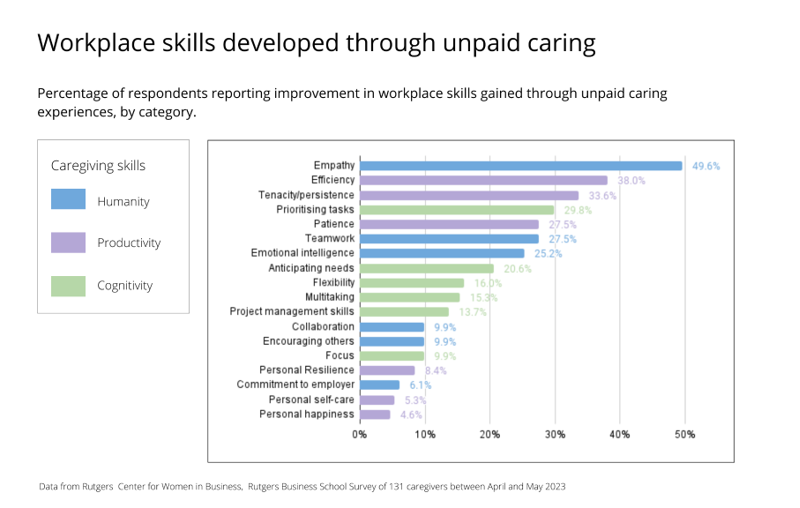
There's also a less-discussed productivity benefit: the teams and managers who cover for a dad on leave develop resilience, cross-functional skills, and confidence.
Enhanced leave builds organisational capability.
What this means for your organisation: Supporting a dad through leave isn't a cost centre. It's a development programme for him, his team, and the managers around him.
3. Gender Equality
This is where enhanced paternity leave moves from an HR initiative to a strategic imperative.
The World Economic Forum's Global Gender Gap Report found that 80% of the gender pay gap is driven by maternity leave, the point at which women step back and men don't
A Pregnant Then Screwed and Centre for Progressive Policy report found that countries with more than six weeks of paid paternity leave have a 4% smaller gender wage gap and a 3.7% smaller labour force participation gap
The Fawcett Society has called for a dedicated period of leave for fathers paid closer to replacement earnings, noting that shared parental leave, while welcome, has failed to shift behaviour at scale because the financial penalty for men remains too high
McKinsey (2020) found that companies with strong diversity and inclusion practices, including robust parental leave policies, are 25% more likely to have above-average profitability.
The logic is straightforward: if only women take extended leave, only women suffer the career penalty. If men take leave too, the penalty disappears. because it becomes the norm for all parents, not a female-specific interruption.
What this means for your organisation: Your gender pay gap reporting, your DEI strategy, and your parental leave policy are the same conversation.
Enhanced paternity leave is the most direct lever you have.
4. Employer Brand
Back to that LinkedIn post.
When senior men visibly take paternity leave and thank their employer publicly, something remarkable happens. It signals, more powerfully than any careers page copy, that your organisation means what it says about family, flexibility, and equality.
The organic reach is real. The application uplift is real. The internal culture shift, where junior dads feel safe to take their entitlement because they've seen someone senior do it, is real.
Employer brand is hard to buy and easy to lose. Enhanced paternity leave, communicated well, builds it faster than almost anything else in your people strategy.
The Macro Picture
In case you need to make the case upward, here's the broader context:
Closing gender employment gaps through better parental leave policy could increase UK economic output by £23 billion(Pregnant Then Screwed / Centre for Progressive Policy)
PWC's Women in Work 2023 report60% drop in income for mothers compared to fathers in the first 10 years after the birth of their first child, measured across OECD countries.
Just 18% of Brits think two weeks of paternity leave or less is sufficient (Pregnant Then Screwed / Centre for Progressive Policy)
The direction of travel is clear. Employers who move now lead. Employers who wait will be forced to follow.
Where Does Your Organisation Stand?
The business case is clear. The harder question is: what's your starting point, and what should you tackle firsT.
That's exactly what the New Parent Employer Scorecard is designed to answer. It takes 3 minutes, benchmarks your current provision across policy, culture, and process, and tells you where the biggest gaps, and the biggest quick wins are.
Further Reading
Inspiring Dads Parental Leave Database - see what leading employers are actually offering
Equal Parental Leave Guide - Business in the Community's practical implementation guide
Pregnant Then Screwed / Centre for Progressive Policy Report - the macroeconomic data in full
Careers After Babies - measurement tips and business case tools.
Research: Caregiver Employees Bring Unique Value to Companies